For warehouse managers and logistics professionals, the efficient utilization of storage space is a constant challenge. One potential solution that often comes into consideration is rolling stack shelving. As a provider of rolling stack shelving systems, I'm here to explore whether this innovative storage solution can be effectively used in a warehouse environment.
Understanding Rolling Stack Shelving
Rolling stack shelving is a type of storage system where individual shelves or racks can be rolled along a track. This design allows for easy access to stored items, as the shelves can be repositioned to expose the ones behind. The system is characterized by its high - density storage capabilities, as it eliminates the need for multiple fixed aisles. Instead, a single aisle can be created as needed by moving the racks.
Factors Influencing the Use of Rolling Stack Shelving in a Warehouse
Space Utilization
One of the most significant advantages of rolling stack shelving in a warehouse is its ability to maximize space. Traditional static shelving systems require multiple aisles for access, which can consume a large portion of the warehouse floor area. In contrast, rolling stack shelving can reduce the aisle space to a minimum, as the racks can be compacted together when not in use. For instance, in a warehouse with limited floor space, rolling stack shelving can increase the storage capacity by up to 50% compared to conventional shelving. This makes it an ideal choice for warehouses dealing with high - volume inventory and limited square footage.
Accessibility
Accessibility to stored items is crucial in a warehouse. Rolling stack shelving offers excellent accessibility, as the shelves can be easily moved to access any desired item. This is particularly beneficial for warehouses that store a wide variety of products, as it allows for quick retrieval of specific items. However, it's important to note that the time required to access items can be slightly longer than with traditional static shelving, especially if the items are located deep within the system. Nevertheless, the overall efficiency gains from the increased storage density often outweigh this minor drawback.
Inventory Management
Effective inventory management is essential for warehouse operations. Rolling stack shelving can support inventory management processes in several ways. Firstly, it allows for better organization of inventory, as the shelves can be labeled and arranged in a logical manner. Secondly, the ability to access all items easily means that inventory checks can be conducted more frequently and accurately. This can help in reducing stockouts and overstocking, leading to improved inventory turnover.
Compatibility with Warehouse Equipment
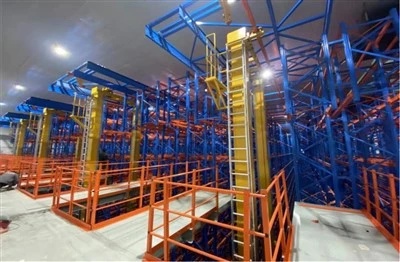
The use of rolling stack shelving in a warehouse also depends on its compatibility with other warehouse equipment. Forklifts, pallet jacks, and automated guided vehicles (AGVs) are commonly used in warehouses, and the rolling stack shelving system should be able to accommodate these. For example, if your warehouse uses AGVs, you need to ensure that the rolling stack shelving can interface smoothly with the AGV Racking System. Additionally, the height and weight capacity of the shelving should be suitable for the equipment used to load and unload the items.


Cost - Effectiveness
Cost is always a major consideration in warehouse operations. While the initial investment in rolling stack shelving may be higher than that of traditional static shelving, the long - term cost - effectiveness can be significant. The increased storage capacity means that less warehouse space may be required, which can lead to lower rent and utility costs. Moreover, the improved inventory management and reduced labor costs associated with faster item retrieval can also contribute to cost savings in the long run.
Comparison with Other Warehouse Storage Systems
Narrow Pallet Racking
Narrow Pallet Racking is another popular storage solution in warehouses. It offers high - density storage like rolling stack shelving. However, narrow pallet racking requires specialized forklifts to operate, which can add to the equipment cost. Rolling stack shelving, on the other hand, can often be accessed with regular forklifts or other standard warehouse equipment, making it more versatile in terms of equipment compatibility.
Rack Steel Pallet Rack
The Rack Steel Pallet Rack is a well - known storage system for palletized goods. It provides a simple and sturdy storage solution but may have lower storage density compared to rolling stack shelving. Rolling stack shelving can store a larger number of pallets in a given area by reducing the aisle space. Additionally, the flexibility of moving the shelves in rolling stack shelving allows for better adaptation to changing inventory needs.
Heavy Duty Storage Racks for Warehouse
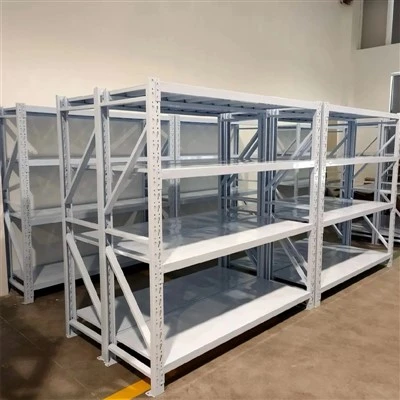
Heavy Duty Storage Racks for Warehouse are designed to handle large and heavy items. While rolling stack shelving can also be built to handle heavy loads, its advantage lies in its high - density storage and ease of access. Heavy - duty storage racks are often static, which may limit the ability to reconfigure the storage space as needed.
Metal Hardware Bins
Metal Hardware Bins are used for storing small parts and components. Rolling stack shelving can be used in conjunction with metal hardware bins to create a comprehensive storage solution for both small and large items. The rolling feature of the shelving allows for easy access to the bins, improving the efficiency of parts picking.
Considerations for Implementing Rolling Stack Shelving in a Warehouse
Warehouse Layout
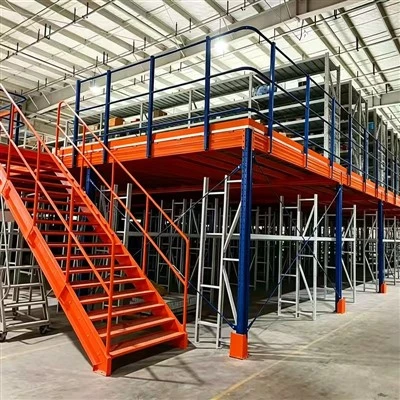
Before implementing rolling stack shelving, a detailed analysis of the warehouse layout is necessary. Factors such as the shape of the warehouse, ceiling height, and the location of columns and other structural elements need to be considered. The rolling stack shelving system should be designed to fit seamlessly into the existing layout while maximizing the storage space.
Safety
Safety is a top priority in any warehouse. Rolling stack shelving systems need to be properly installed and maintained to ensure the safety of employees. The tracks and wheels of the racks should be regularly inspected for wear and tear, and the locking mechanisms should be in good working condition to prevent accidental movement of the shelves.
Future Expansion
As your business grows, your warehouse storage needs may change. When implementing rolling stack shelving, it's important to consider future expansion. The system should be designed in such a way that it can be easily expanded or reconfigured to accommodate increased inventory.
Conclusion
In conclusion, rolling stack shelving can be an excellent choice for warehouses. Its high - density storage capabilities, accessibility, and support for inventory management make it a valuable asset in optimizing warehouse operations. While it may not be suitable for every warehouse situation, it offers significant advantages over traditional storage systems in many cases.
If you're considering upgrading your warehouse storage system and want to explore the potential of rolling stack shelving, I encourage you to reach out. We, as a rolling stack shelving supplier, have the expertise and experience to provide you with a customized solution that meets your specific needs. Contact us to discuss your requirements and start the process of transforming your warehouse into a more efficient and productive space.
References
- Brown, J. (2022). Warehouse Storage Systems: A Comprehensive Guide. Logistics Press.
- White, S. (2021). Maximizing Warehouse Space with Innovative Storage Solutions. Supply Chain Journal.
- Green, R. (2020). The Future of Warehouse Storage: Trends and Technologies. Industry Insights Magazine.